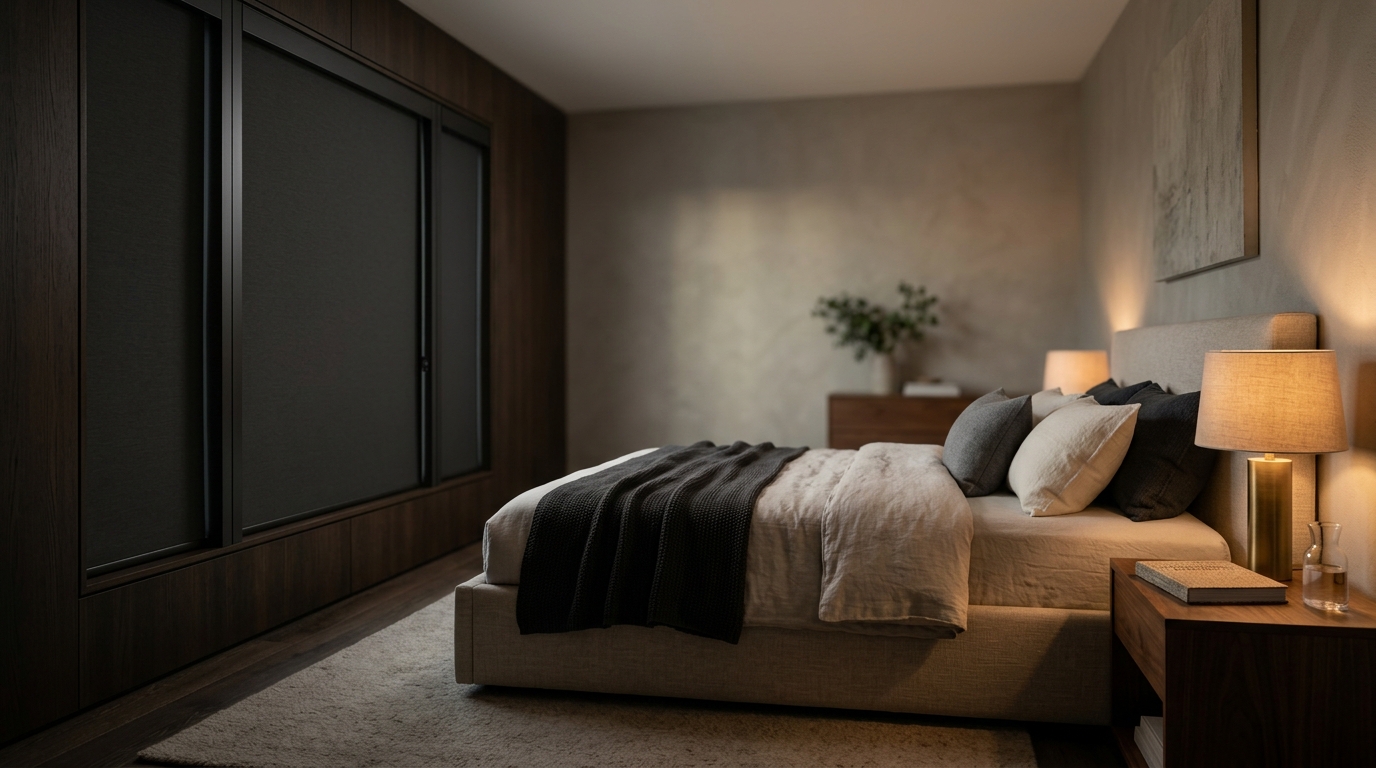
Most shades called 'blackout' still leak light around the edges, at the top, and through the sides — which is exactly where a Manhattan sunrise or a glowing building across the street ruins your sleep. True blackout is an engineering problem, not just a fabric choice. We build it correctly with the right liner, the right mount, and side channels where it matters.
Why most 'blackout' shades still leak
The fabric blocks light, but the gaps do not. A standard inside-mount shade leaves a finger of light down each side and a glow over the top. In a bedroom facing east, that is the difference between sleeping until seven and waking at 5:45 from May through August.
We solve it with the mount and the hardware: outside mounts that overlap the frame, side channels that seal the edges, and a top treatment or pocket that closes the gap above. The fabric is the easy part.
Clients call us to replace 'blackout' shades that never actually made the room dark. The fix is almost always the edges, not the fabric.
— Glamour Decorating, from 30 years of NYC installs
Where blackout earns its keep
Primary bedrooms, especially east and west-facing. Nurseries and kids' rooms, where daytime naps depend on real darkness. Media rooms and home theaters, where any light washes out the screen. In each, we pair the blackout layer with a daytime layer — a sheer or solar shade — so you are not living in a dark cave when you do not need to be.
Motorized blackout is the upgrade you use daily
A motorized Somfy blackout shade on a schedule means the room darkens for sleep and opens to the sunrise on its own. Quiet enough not to wake you, precise enough to hold position for years. For the bedroom, it is one of the highest-payoff upgrades in the home.